






The typical return data link signal is incredibly small and must be amplified before it can be
processed and the data itself reconstructed. The low-noise amplifiers that reside in the antennas
of the DSN provide this amplification while adding the least amount of noise of any such devices in
the world.
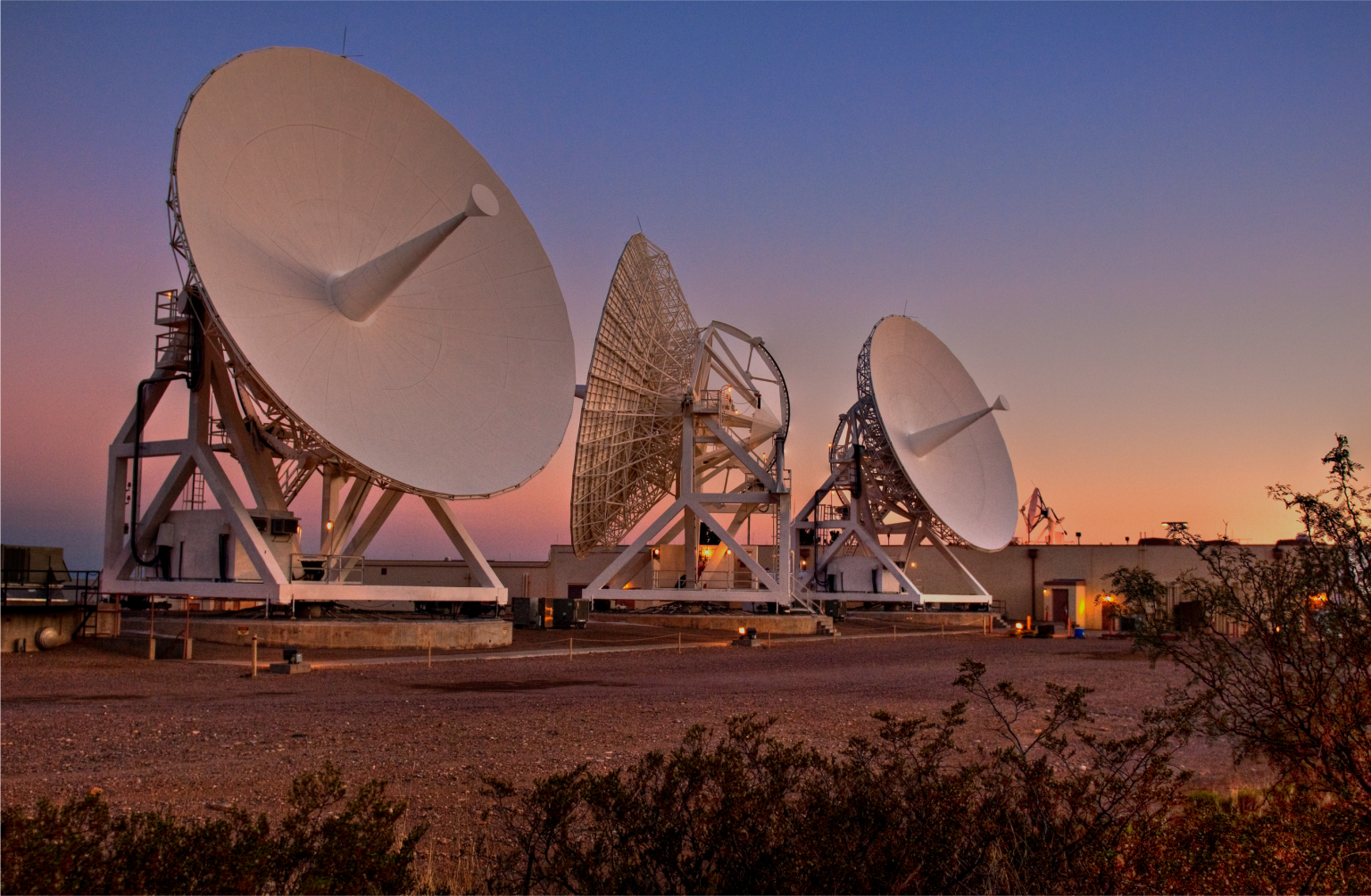
The first DSN application of the cooled HEMT amplifiers came with the outfitting of the NRAO
Very Large Array (VLA) in Socorro, New Mexico for collaborative support of the Voyager-Neptune
encounter. The VLA was designed for mapping radio emissions from distant stars and galaxies, and
consists of 27 antennas, each 25 m in diameter, arranged in a tri-axial configuration. Within the
funding constraints, only a small part of the VLA could be outfitted with TWMs, whereas HEMTs for
the entire array were affordable and were expected to give an equivalent sensitivity for the
combined full array. In actuality, technical progress with the HEMTs under the Advanced Systems
Program during the several years taken to build and deploy the needed X-band (8 GHz) amplifiers
resulted in better performance for the fully equipped VLA than would have been possible with the VLA
partially equipped with the more expensive TWMs. Since that time, many of the DSN operational
antennas have had the cooled HEMT amplifiers installed for the 2- and 8-GHz bands.
Once through the first stages of processing in the low-noise amplifiers, there are still many
transformations needed to convert the radio signal from a spacecraft into a replica of the data
stream originating on that spacecraft. Some of these transformations are by nature analog and
linear, and others digital with discrete quantization. All must be performed with virtually no loss
in fidelity for the resultant data stream.
The signal typically consists of a narrow-band "residual carrier" sine wave, together
with a symmetric pair of modulation sidebands, each of which carries a replica of the spacecraft
data. (Specifics of the signal values vary greatly, but are not essential for this general
discussion.) If this signal is cross-correlated with a pure identical copy of the residual carrier,
the two sidebands will fold together, creating a low-frequency signal that contains a cleaner
replica of the spacecraft data than either sideband alone. Of course, such a pure copy of the
carrier signal does not exist, but must be created, typically via an adaptive narrow-band filter
known as a phase-locked loop. The recreated carrier reference is thus used to extract the
sidebands. The strength of the resultant data signal is diminished to the extent that this local
carrier reference fails to be an identical copy of the received residual carrier. Noise in the
spectral neighborhood of the received residual carrier and dynamic variations in the phase of the
carrier itself limit the ability to phase-lock the local reference to it.
These dynamic variations are predominantly the Doppler effect of the relative motion between the
distant spacecraft and the DSN antenna on the surface of a spinning Earth; they interfere with the
return data link process, but themselves provide for a radio location function. Over the years, the
DSN Advanced Systems Program has contributed significantly to the design for the phase-locked loops
and to the knowledge of phase-coherent communications, and thus to the performance of the
operational DSN.
Further steps in converting a spacecraft signal into a replica of the spacecraft data stream are
accomplished by averaging the signal over brief intervals of time that correspond to each symbol (or
bit) transmitted from the spacecraft, and by sampling these averages to create a sequence of
numbers, often referred to as a "symbol stream." These averages must be precisely
synchronized with the transitions in the signal as sent from the spacecraft, so that each contains
as much as possible of the associated symbol and as little as possible of the adjacent ones. In
usual cases, a subcarrier, or secondary carrier, is employed to shape the spectrum of the spacecraft
signal, and it will be phase-tracked and removed at this stage. There are several different
generations of equipment in the current DSN that perform this stage of processing. Designs for all
of these have their roots in the products of the DSN Advanced Systems Program. The oldest current
equipment is of a design derived from the Multimission Telemetry Demonstration, done in the late
1960s by a partnership of the DSN Advanced Systems Program and the DSN Implementation Programs.
This equipment is mostly analog in nature and, while still effective, is subject to component value
shifts with time and temperature, and thus requires periodic tending and adjustments to maintain
desired performance.
As digital devices became faster and more complex, it became possible to develop digital
equipment that could perform this stage of signal processing. Digital demodulation techniques were
demonstrated by the Advanced Systems Program in the early 1970s in an all-digital ranging system.
Similar techniques were subsequently employed for data detection in the second generation of the
Demodulator-Synchronizer Assembly.
The sequence of numbers from the demodulator-synchronizer equipment is still not the replica of
the mission data stream on the spacecraft, because, in most circumstances, special codes have been
applied to that data stream to improve the reliability of communications. These codes transform the
data before they leave the spacecraft, adding carefully designed redundancy and complexity, and the
resultant coded stream is reverse transformed by decoding equipment at the DSN site in order to
recover the original data stream. The best codes to be used for reliable data transfer have been
identified by research performed under the Advanced Systems Program; that work is still making
progress. The present accepted standard, flown on Voyager and Galileo, consists of a short
convolutional code that is combined with a large block-size Reed-Solomon code. The standard
algorithm for the decoding of convolutional codes was devised in consultation with JPL researchers,
and demonstrated by simulations performed under the Advanced Systems Program. Prototypes of the
decoding equipment have been fabricated and demonstrated at JPL, also with the support of the
Advanced Systems Program.
Evolution of the use of codes and decoding equipment has been paced by the evolution of digital
processing capability. At the time of the Voyager design, a convolutional code of length k=7 was
chosen as a compromise between performance and decoding complexity, which would grow exponentially
with code length. Equipment was implemented around the DSN to handle this code from Voyager and
subsequently from Magellan, Galileo, and others. Modern digital technology has permitted the
construction of much more complex decoders, and a code of length k=15 was devised with the support
of the Advanced Systems Program. This code was installed as an experiment on the Galileo
spacecraft shortly before its launch. The corresponding prototype decoder was completed soon
afterward. Though not needed for Galileo because of its antenna problem, the more complex decoder
will be implemented around the DSN for support of Cassini and subsequent missions.
Other types of codes have been used in the past, and continue to be active on some of the older
spacecraft. The DSN Advanced Systems Program has played a part in each. The imaging data of
Mariner '69 was encoded using short block codes with a self-synchronizing feature devised by the
Advanced Systems Program researchers. A decoder for this code was constructed and used
experimentally to provide a substantial increase in the data volume returned from the mission. At
about the same time, Pioneer 9 was launched with a very complex code of length k=25, which could be
decoded by an iterative approximation technique known as "sequential decoding." The code
was chosen to satisfy the needs of Pioneer's experimenters who would accept intermittent gaps in
their data caused by decoding failure in exchange for knowledge that successfully decoded data would
be virtually error-free.
Decoding was planned to be performed by mission operations at Ames Research Center using a
recorded symbol stream delivered from the DSN. In conjunction with Pioneer, the DSN Advanced
Systems Program explored and demonstrated the potential for decoding this code in real-time via a
very high-speed engineering model sequential decoder. With the rapid evolution in capability of
small computers, it became apparent that decoding Pioneer's data in such computers was both feasible
and economical. Subsequent implementation of sequential decoding in the DSN was done via
micro-programming of a small computer, guided by the knowledge gained via the efforts of the
Advanced Systems Program. The subsequent Pioneer-10 and -11 spacecraft flew with a related code of
length k=32, and are still supported by the DSN in a computer-based decoder.
Source encoding and data compression are not typically considered a part of the DSN's downlink
functions, but the mathemagics that underlie coding and decoding are a counterpart of those that
guide the development of data compression. Simply stated, channel encoding is the insertion of
structured redundancy into a data stream, while data compression is the finding and removal of
intrinsic redundancy. Imaging data are often highly redundant and can be compressed by factors of
at least two, and often four or more, without loss in quality. For Voyager, the combined effect of
a very simplified image compression process, which was constrained to fit into available onboard
memory, and the corresponding changes to the channel coding was about a factor-of-two increase in
the number of images returned from Uranus and Neptune.
As with many other items of technology, properly crediting this end result is difficult. There
is an active international community with interests in data compression for many purposes.
Researchers under the DSN Advanced Systems Program have contributed significantly to the current
state of the art. However, it remained for others to actually establish data compression on Voyager
in flight, and on subsequent missions. By the time of the design of the Galileo data system, data
compression had become a regular option for about a factor of two in the imaging data system. The
failure of Galileo's high-gain antenna (HGA) prompted an intense effort to find compression schemes
that would recover some of the Galileo imaging data that otherwise could not be returned.
--> Next Section
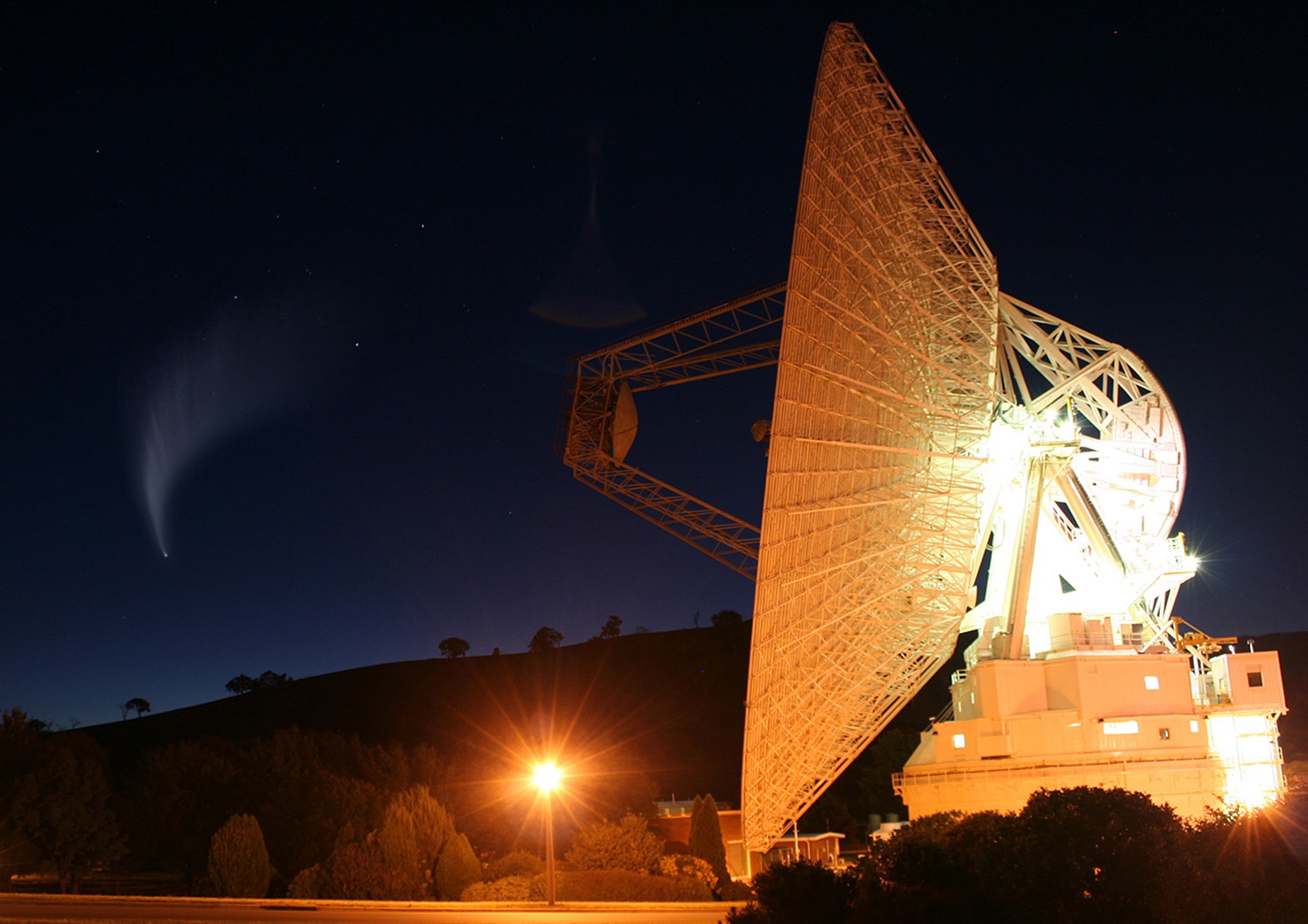
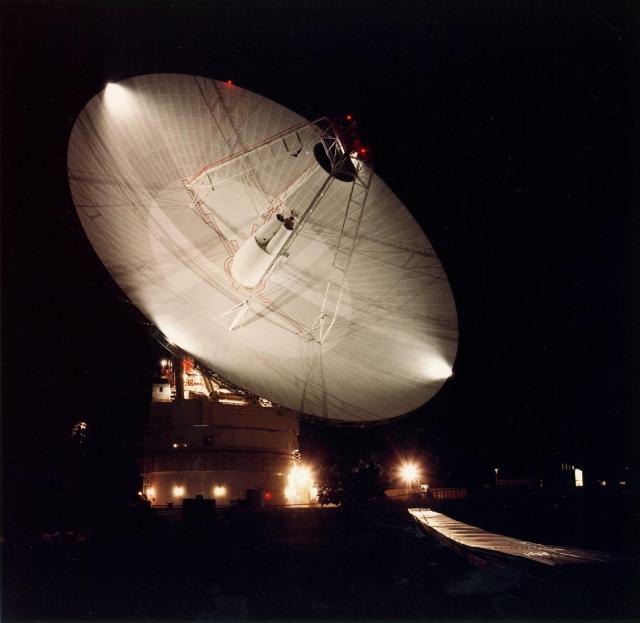
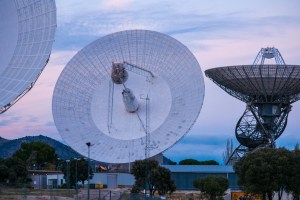
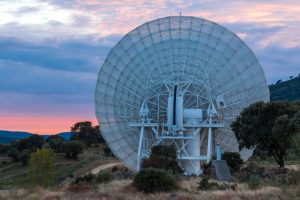
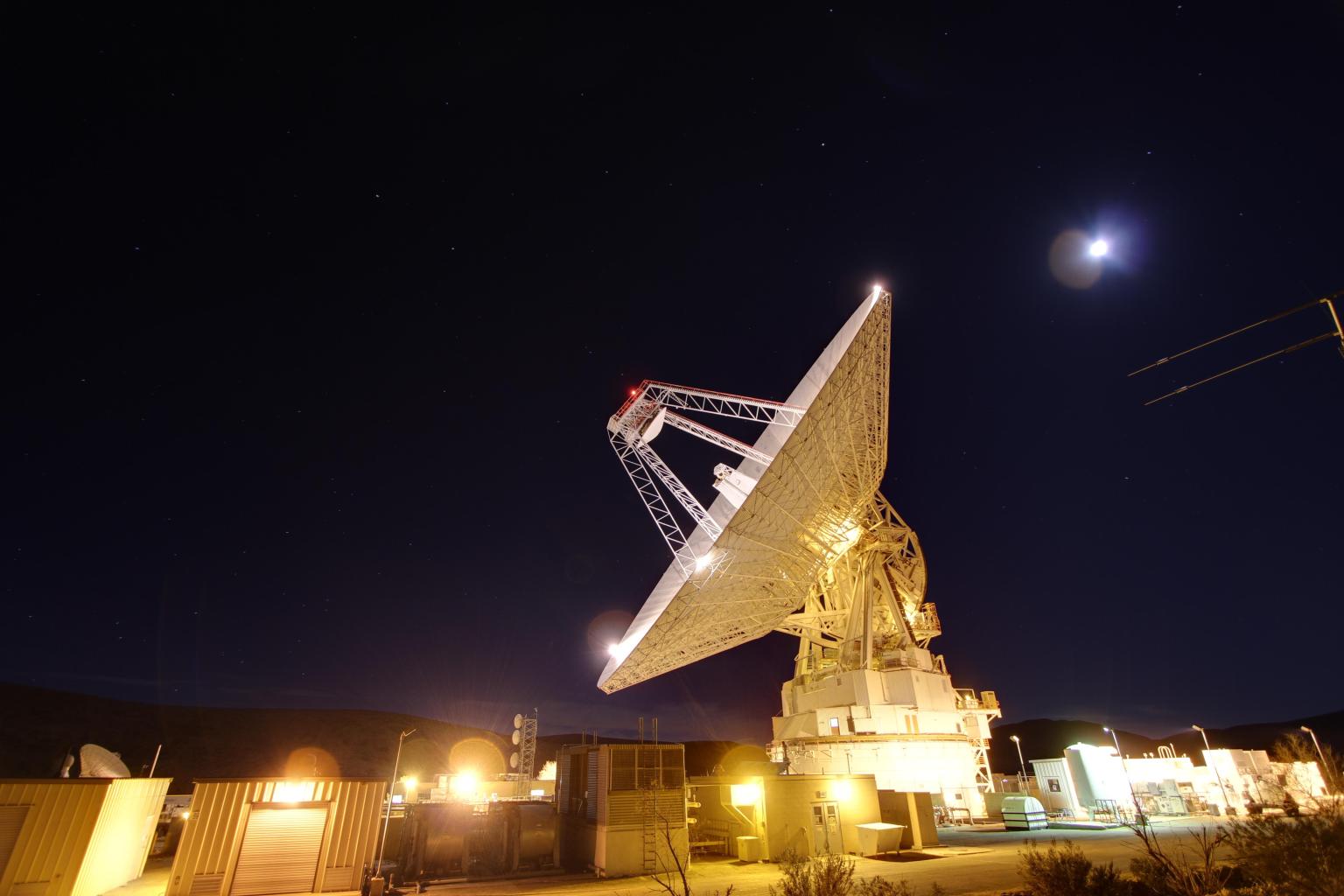
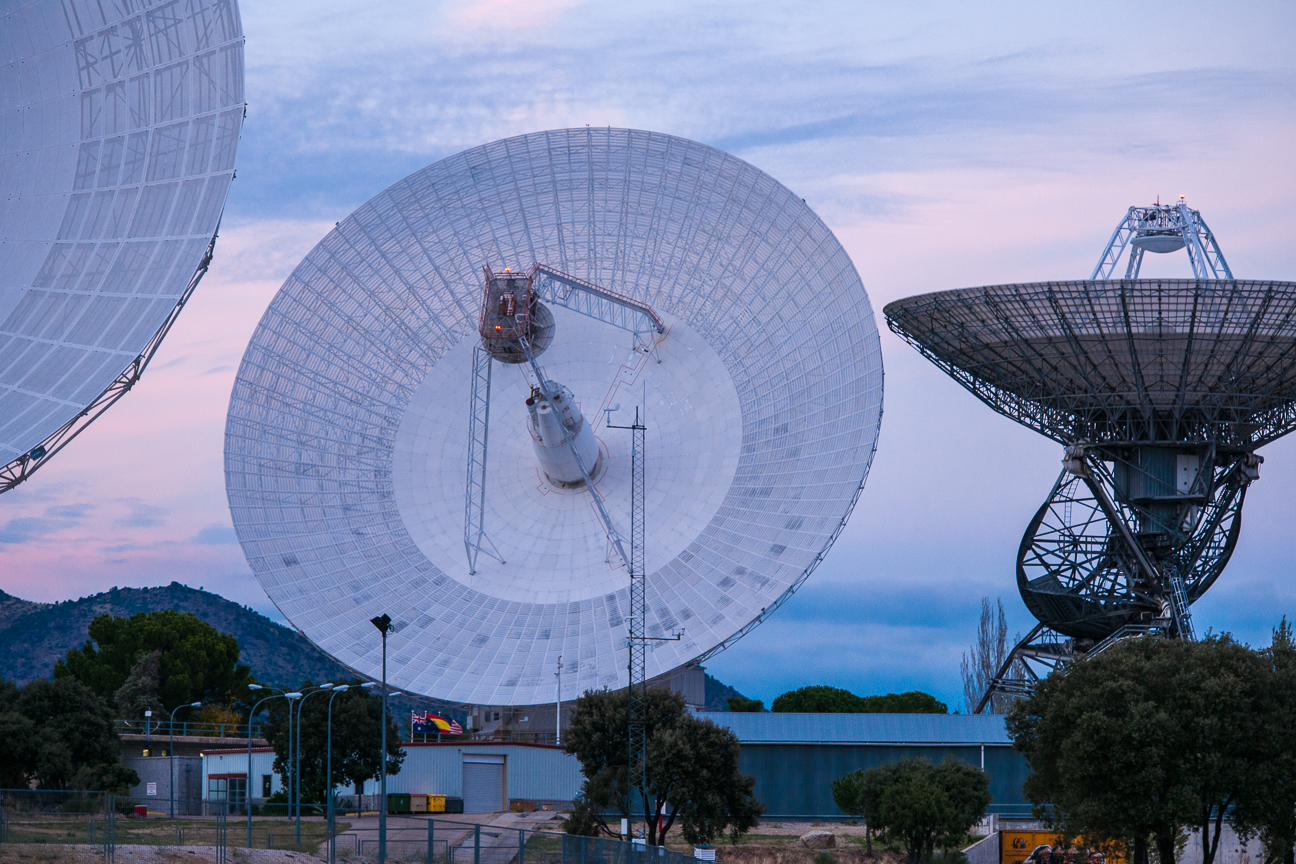
Throughout the DSN, the same antennas are used for both the forward link
and the return data link signals. Because the strength of a signal decreases as the square of the
distance it must travel, these two signals may differ in strength by a factor of 10
24 in a DSN antenna. Isolating the return signal path from interference by the much
stronger forward signal has posed a significant technical challenge. These two signals differ
somewhat in frequency, so at least a part of this isolation is accomplished via dichroic or
frequency selective reflectors. These reflectors consist of periodic
arrays of metallic/dielectric elements tuned for the specific frequencies, which are to be either
reflected or passed through.
One of the strongest design constraints is that noise added to the received signal must be
minimized. Prototypes of almost all of this type of reflectors currently in use in the DSN were
developed under the DSN Advanced Systems Program, as well as microwave analytical design tools that
can be used to affix design details for almost any conceivable dichroic reflector applicable to the
frequency bands of the DSN.
Low-Noise Amplifiers
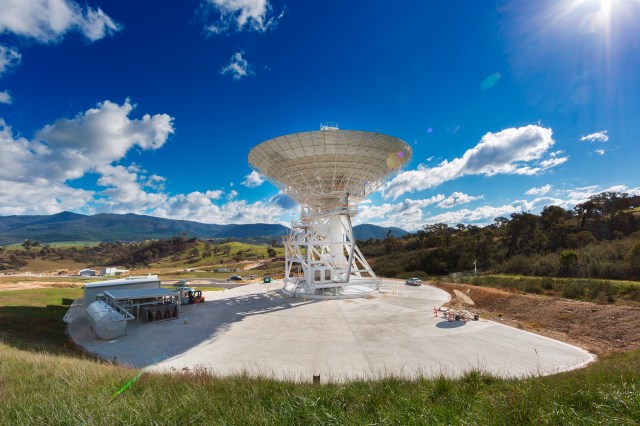
The quietest of the operational devices are known as traveling-wave masers (TWMs),
which amplify signals that are propagating along the length of a tuned ruby crystal. Noise in a TWM
depends upon the physical temperature of the crystal, and those in operation in the DSN operate in a
liquid helium bath at 4.2 kelvin. Invented by University of Michigan researchers, early development
of practical amplifiers for the DSN was carried out under the DSN Advanced Systems Program, as were
many improvements throughout the Network's history. The quietest
amplifiers in the world today, which operate at a physical temperature of 1.2 kelvin, were
developed by the DSN Advanced Systems Program and demonstrated at the Technology Development Field
Test Site, Deep Space Station 13 (DSS 13).
Some of the low-noise amplifiers in the DSN today are not TWMs, but are a special
kind of transistor amplifier using high-electron mobility transistors
(HEMTs) in amplifiers cooled to a physical temperature of about 15 kelvin. Initial development of
such amplifiers occurred at the University of California at Berkeley, leading to their adoption by
the radio astronomy community. This in turn spawned the JPL development work that was carried out
via collaboration involving JPL and the DSN Advanced Systems Program, radio astronomers at the
National Radio Astronomy Observatory (NRAO), and device developers at General Electric. This work
built upon progress in the commercial sector with uncooled transistor amplifiers. In the 2-GHz DSN
band, the cooled HEMT amplifiers are almost as noise-free as the corresponding TWMs, and the
refrigeration equipment needed to cool the HEMTs to 15 kelvin is much less troublesome than that for
the TWMs. Primarily for this reason, current development efforts in the DSN Advanced Technology
area are focused on improving the noise performance of the HEMT amplifiers for the higher DSN
frequency bands.
Phase-Lock Tracking
Synchronization and Detection
A Digital Receiver
More recently, the ongoing evolution of the capabilities of digital devices has made
possible the migration of digital techniques into the filtering, detection, and phase-lock processes
of the receiving systems. Because of this, the Advanced Receiver (ARX)
developed under the Advanced Systems Program has a demonstrated precision of performance, which is
almost inconceivable for conventional analog signal handling methods. A copy of the ARX has been
constructed and deployed to the DSN Australian site for ad-hoc support of the Pioneer 10 spacecraft
on its way out of the solar system, thus delaying the date at which the signal becomes too weak to
be reliably received.
Current implementation efforts have been concluded on a new operational receiver (the Block-V) for
the DSN, which builds upon the design techniques of the ARX and incorporates all of the functions of
the current receivers and the demodulator-synchronizer equipment. By 1997, all of the older
generations of this equipment should be out of the DSN, replaced by the new digital Block-V
receiver, which offers improved technical signal handling performance, as well as improved
maintainability.
Codes and Decoding
Efforts of the Advanced Systems Program provided the understanding of telemetry
performance to be expected with the use of these codes. The figure
displays the reliability of the communication (actually, the probability of erroneous data bits), as
it depends upon the spacecraft signal energy allocated to each data bit for uncoded communication
and three different codes. One of these is the Voyager k=7 code, shown both alone, and in
combination with the Reed-Solomon code. Second is the k=15 code, which was to be demonstrated with
Galileo's high-rate channel, shown alone and in combination with the Reed-Solomon code, either as
constrained by the Galileo's data system (I=2) or in ideal combination. Third, and finally, is the
k=14 code devised by the Advanced Systems Program researchers for the Galileo low-rate mission,
shown both alone and in combination with the selected unbalanced Reed-Solomon code and a complex
four-stage decoder. The added complexity of the codes, which has its greatest effect in the size of
the decoder, clearly provides increased reliability of correct communication. Research on new and
improved codes continues.
Data Compression -- A Mathemagical Twin of Coding
Go To:
--> Previous Section
-->
Home Page